The Pineal Gland & The Third Eye (Ajna): Yogic Secrets of Amrita & Awakening
The Biological
 The Secret of the Pineal Gland in Indian Yogic Tradition: Awakening Intuition and the Inner Eye
“There is a light that shines beyond the sun, beyond the moon, beyond all the stars. Those who discover it no longer seek illumination elsewhere.”
For thousands of years, Indian yogis spoke of an inner center of perception that could reveal profound clarity, insight, and self-awareness. Long before modern anatomy identified the tiny pineal gland deep within the brain, spiritual traditions described the Ajna Chakra—the “command center” or “third eye”—as the seat of intuition and higher understanding.
Today, the pineal gland has become the subject of fascination in spiritual circles. Some claim it is the “gateway to higher consciousness,” while others attribute extraordinary psychic abilities to it. Scientific research, however, paints a more measured picture. The pineal gland is a real endocrine organ that primarily regulates the sleep–wake cycle through the hormone melatonin. The idea that it unlocks supernatural powers has not been established by scientific evidence.
Even so, the symbolic relationship between the pineal gland and the yogic concept of the third eye offers a fascinating window into India’s spiritual heritage.
The Pineal Gland: A Tiny Organ with an Important Role
The pineal gland is a small, pinecone-shaped endocrine gland located near the center of the brain.
Modern science has shown that it:
- produces melatonin,
- helps regulate circadian rhythms,
- responds indirectly to light and darkness,
- contributes to healthy sleep patterns.
Although physically small, its influence on biological rhythms is significant.
Because of its central location and unique role, philosophers and mystics throughout history have often regarded it as a symbolically important structure.
The Third Eye in Indian Yogic Tradition
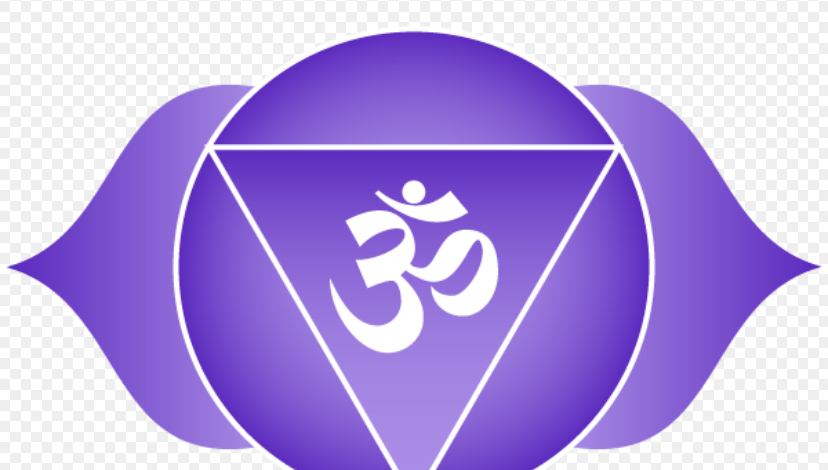
Indian yoga does not describe the pineal gland directly. Instead, classical texts discuss the Ajna Chakra, located symbolically between the eyebrows.
The Sanskrit word Ajna means “command” or “authority.”
It is traditionally associated with:
- discrimination,
- insight,
- concentration,
- intuition,
- inner guidance,
- and clarity of awareness.
Rather than representing a physical organ, the Ajna Chakra is part of a subtle-body model used in many yogic and tantric traditions.
Why the Third Eye Matters
Ancient yogis observed that human beings experience reality through the senses.
We see.
We hear.
We smell.
We taste.
We touch.
Yet they believed there was another way of knowing—direct insight that arises from a quiet, disciplined mind.
This inner knowing was described as intuition.
Unlike impulse or guesswork, intuition in yogic philosophy develops through sustained practice, ethical living, and careful observation of one’s own mind.
The Meaning of Intuition in Yoga
In modern language, intuition often means a “gut feeling.”
In classical yoga, intuition has a deeper meaning.
It refers to insight that arises when mental agitation subsides.
Traditional teachings suggest that when distractions diminish, perception becomes clearer. One may notice patterns, understand situations more deeply, and respond with greater wisdom.
This idea aligns with everyday experience: a calm mind often makes better judgments than one overwhelmed by stress.
Meditation and the Quiet Mind
Meditation occupies a central place in Indian spiritual traditions.
Many practitioners report that regular meditation helps:
- improve concentration,
- reduce mental chatter,
- increase emotional balance,
- and foster a sense of clarity.
Modern research supports several of these benefits, showing that meditation can enhance attention, reduce stress, and improve emotional regulation. These findings do not imply supernatural perception but do illustrate how contemplative practice can influence cognition and well-being.
Trataka: The Practice of Steady Gazing
One classical yogic exercise associated with concentration is Trataka.
In this practice, attention is gently focused on a fixed object, such as a candle flame, before closing the eyes and observing the afterimage.
Traditionally, Trataka is said to strengthen concentration and support meditation.
From a modern perspective, it can be understood as a focused-attention exercise that trains sustained awareness.
It should be practiced carefully, avoiding prolonged staring that could strain the eyes.
Breath, Awareness, and Inner Balance
Yogic traditions emphasize the connection between breath and mind.
Practices such as slow, controlled breathing are believed to steady attention and prepare the mind for meditation.
Scientific studies likewise suggest that slow breathing can activate the body’s relaxation response and help regulate stress.
The convergence is notable:
Ancient language speaks of balancing prana.
Modern science speaks of autonomic regulation.
Different frameworks, yet both recognize the importance of calm, intentional breathing.
Why the Pineal Gland Became Spiritually Significant
The pineal gland has inspired symbolic interpretations for centuries.
Its central location within the brain, sensitivity to light–dark cycles, and role in biological rhythms encouraged philosophers to see it as a bridge between the outer and inner worlds.
Later spiritual traditions sometimes associated it with the third eye.
While this association is culturally meaningful, it should not be mistaken for an anatomical claim found in classical yogic texts.
Myths and Modern Evidence
The internet is filled with claims that the pineal gland can:
- produce supernatural visions,
- unlock psychic abilities,
- enable telepathy,
- or instantly awaken enlightenment.
These claims are not supported by current scientific evidence.
Similarly, common assertions about “decalcifying” the pineal gland through specific diets or supplements remain speculative and are not established medical practices.
This does not diminish the value of meditation or yoga; it simply encourages separating metaphor, tradition, and evidence.
Cultivating Intuition: A Yogic Perspective
Traditional teachings suggest that intuition grows through disciplined living rather than shortcuts.
Practices commonly emphasized include:
- meditation,
- ethical conduct,
- self-reflection,
- mindful breathing,
- study,
- compassion,
- and consistency.
The aim is not to escape reality but to perceive it more clearly.
The Symbolism of Light
Many Upanishadic passages describe an inner light—not as a physical beam but as a metaphor for awareness.
When the mind becomes quiet, familiar experiences may be seen with greater depth.
The “opening of the third eye” can therefore be understood symbolically as the gradual emergence of insight.
Lessons for Modern Life
Whether one interprets the third eye spiritually or psychologically, its lessons remain relevant.
In a world of constant notifications, rapid decisions, and endless information, cultivating focused attention is increasingly valuable.
The practices recommended by yogic traditions—reflection, moderation, meditation, and self-discipline—can help individuals respond thoughtfully rather than react impulsively.
Conclusion: The Real Secret
Perhaps the greatest secret of the pineal gland is not hidden within anatomy but within the discipline it has inspired.
Indian yogic traditions invite us to develop an inner faculty of clear seeing.
Modern science reminds us to distinguish symbolism from biological fact.
Together, they offer a balanced perspective.
The pineal gland regulates important biological rhythms.
The Ajna Chakra symbolizes awakened awareness.
Meditation refines attention.
Ethical living steadies the mind.
Intuition matures through experience, reflection, and practice.
The true “third eye” may not be a mysterious organ waiting to be activated. Instead, it can be understood as the gradual cultivation of wisdom—the ability to perceive ourselves and the world with greater clarity, compassion, and discernment.
In that sense, the ancient yogis were pointing not toward magic, but toward one of humanity’s most enduring possibilities: the transformation of consciousness through sustained inner practice.


Comments